Two Deck Spider Solitaire offers a perfect balance of challenge and relaxation. The two-suit variant requires more strategic thinking than single-suit versions, keeping the game engaging without being overwhelming. The unlimited undo feature is a welcome addition, letting you experiment freely. Clean design and smooth gameplay make it a pleasant experience for both casual and dedicated solitaire fans.
Two Deck Spider Solitaire is a classic card puzzle that expands on the traditional solitaire format. Players work with a total of 104 cards drawn from two standard decks, featuring hearts and spades. The main objective is to arrange all cards into complete sequences from king down to ace within each suit. This version offers a greater level of complexity compared to single-suit games, requiring more attention and strategic thought. It provides a rewarding mental exercise suitable for players of various ages who enjoy logical challenges and pattern recognition.
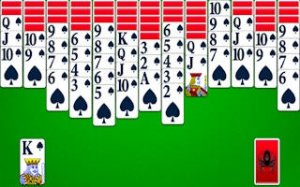
To begin, the two decks are shuffled together and dealt into ten tableau piles. Each pile typically contains several face-down cards with one face-up card on top. The remaining cards form a stockpile for later use. Players move cards between tableau piles to build descending sequences, regardless of suit. However, a sequence of cards can only be moved together if they share the same suit. Empty tableau piles can be filled with any card or sequence. When no moves are available, additional cards can be drawn from the stockpile. The game continues until all cards are arranged in complete suit-based sequences from king to ace.
The game includes a clean interface designed for smooth interaction. An unlimited undo option allows players to reverse moves and explore different strategies. The stockpile provides extra cards when the tableau becomes blocked. Each session begins with a random shuffle, ensuring every game presents a fresh arrangement. The focus on two suits adds a layer of planning that distinguishes it from simpler variants.
Prioritize revealing face-down cards early to create more options. Build same-suit sequences whenever possible, as they can be moved together. Use empty tableau piles to reorganize cards and create new opportunities. Think ahead and consider multiple moves before acting. Regular practice helps improve pattern recognition and decision-making skills.





Player Comments
Sign in to comment
You must be logged in before posting a review or rating.
No account? Create one
No comments yet. Be the first to comment!